Passive House Developments
What is it?
Passive house is an internationally-recognized, rigorous standard for sustainable and energy- efficient real estate development.
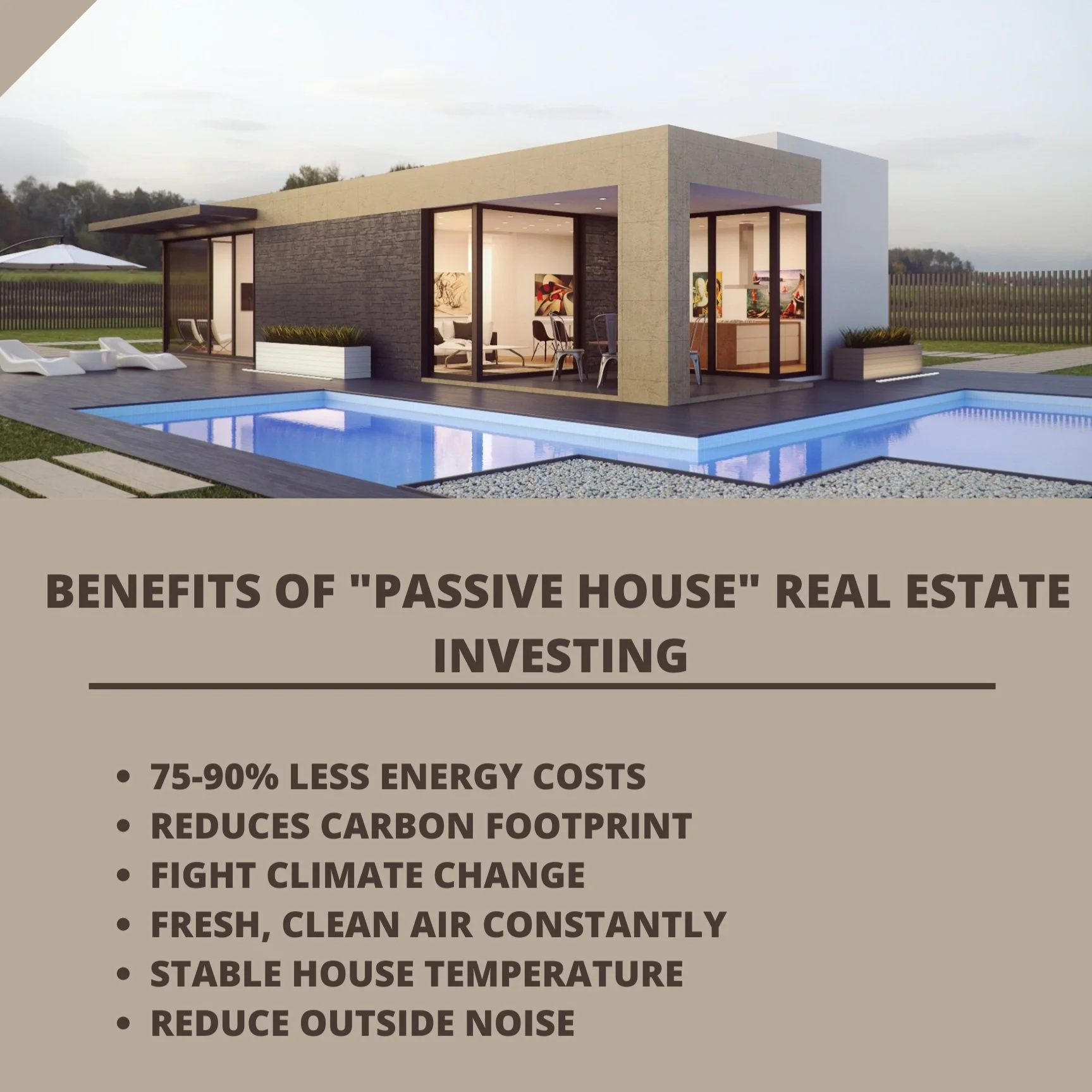
Buildings that have passed the Passive House standard generate benefits such as cleaner air, better energy conservation, more wellness, and lower operating costs that offset slightly higher (5-10%) costs of development. Crucially, the development standard results in 75-90% reduction in carbon emissions.
Benefits
Other benefits of Passive House buildings tend to be even temperatures, less noise, and fresh air. Fresh air circulation is achieved by not recirculating air; a key property of Passive House ventilation is that air is exhausting continuously. This also helps reduce the spread of airborne diseases such as COVID-19.
Heat loss that usually happens in buildings and real estate through the property’s walls, roof and windows is reduced substantially due to (1) thermal insulation (2) triple-glazed windows, (3) airtight building envelope (4) and a ventilation system with heat recovery. As a result, a significant part of a Passive House building’s energy and heating needs is satisfied by "passive" sources (i.e. solar radiation heat). Ultimately, as the heat is retained for much longer due to the ventilation system and airtight building envelope, heating from “active” sources is needed only during very cold temperatures. This results in large savings in energy expenditures and more predictable and stable utility expenses.
History:
The Passive House concept is 30+ years old now. It was originally started as an experiment by Wolfgang Feist, a German physicist and professor. The first Passive House project was pioneered in Darmstadt, Germany.